Mining equipment earns every bruise it carries. It works under load, in abrasive dust, around heat, vibration, and corrosives. A single weld pore or sensor fault can idle a shaft, and an overlooked torque spec can turn into a dropped load. Safety and reliability standards are not red tape in this environment, they are the thin line that keeps crews alive and production on schedule. Manufacturers that treat those standards as a living discipline rather than a checklist are the ones operators trust for the long haul.
I have spent enough time inside machine shops, at underground audits, and on commissioning floors to see what separates a compliant machine from a dependable one. The difference shows up in the way engineering teams write a maintenance-friendly spec, how welders document preheat for a high-strength frame, and how a quality manager reacts when a supplier’s cert looks a little too clean. The details add up.
The standards landscape that actually governs the work
Every region has its own regulatory spine, and mining adds a thick layer of industry codes on top. In North America, MSHA sets the baseline for mine safety in the United States, while provinces in Canada enforce their own regulations alongside national standards. Manufacturers selling into both markets usually anchor their designs to a common denominator of recognized frameworks.
Electrical and control systems lean on IEC 60204-1 and NFPA 79 for industrial machines, with IEC 61508 and ISO 13849 guiding functional safety. If a haul truck or continuous miner has any safety-related control function, you will see a Safety Integrity Level (SIL) or Performance Level (PL) claim attached to it. Those claims are meaningless without a verification trail: failure mode and effects analysis, diagnostic coverage calculations, proof test intervals, and component reliability data. When an Underground mining equipment supplier says their gas detection logic is SIL 2 capable, you should be able to trace how they derived PFH values and see the test records to back them up.
Mechanical integrity rides on standards like ISO 9001 for quality management and ISO 3834 for welding quality requirements. The heavy frames and booms that take the beating often use quenched and tempered steels that need documented preheat, interpass temperature control, and post-weld inspection per AWS D14 or CSA W59. Structural integrity is not just about weld bead appearance. It includes procedure qualification records with Charpy impact results at realistic service temperatures, and phased array ultrasonic testing for critical joints where visual inspection tells you very little.
For electrical enclosures in dusty, wet headings, IP and NEMA ingress ratings matter. Intrinsic safety and explosion protection enter the picture for methane or coal dust, and you’ll see IECEx or ATEX marks on components and assemblies. Canadian mines add CSA Group certifications, particularly on field devices. A reputable canadian manufacturer in industrial machinery manufacturing will be fluent in CSA C22.2 requirements for mining categories, not just general industry.
Everything flows through risk assessments. ISO 12100 frames the process for machinery, and a solid hazard analysis in mining will consider rockfall, overtravel, hydraulic energy, gas accumulation, poor visibility, and the human factors of fatigue and noise. A good assessment drives specific design responses, not generic labels.
Design choices that make safety real
Mining machines start safe on paper. They stay safe when design teams make clear-eyed trade-offs.
Guarding looks simple until you try to protect a pinch point that mechanics must access every shift. Fixed guards should be tool-removable and keyed to fasteners that can survive corrosion. Hinged guards with interlocks are justified where frequent access is unavoidable. The interlocks should be monitored for faults, wired in a way that a single short cannot defeat them, and rated for the environment. On a rock breaker, I once saw a clever electro-hydraulic interlock that bled down pressure when a maintenance hatch opened. It added a few seconds to each task, and it probably saved knuckles daily.
Visibility features matter underground where dust, fog, and tight corners are the norm. High-lumen LED work lights mounted away from vibration hotspots last longer. Cameras and proximity detection systems help, but they must tie into operator workflow instead of layering alarms that crews learn to ignore. Smart design keeps annunciation simple: bright status lights for high-level states and clear, low-latency video at the operator’s station. The more latency or false alarms, the more likely the operator will bypass the system.
Hydraulic safety gets underestimated. Cylinder drift and hose whip have injured plenty of crews. Cylinder-mounted check valves and load-holding valves are not optional on booms and lifts. Hose routing needs abrasion sleeving, proper bend radii, and clamp spacing. A build to print specification that calls out brand-agnostic “equivalent” hoses with no pressure impulse requirement is a red flag. The right spec cites SAE 100R families and ISO 6803 impulse testing, then verifies with receiving inspection. A steel fabricator with mining experience will also machine hardline blocks with generous wall thickness and smooth ports so fittings torque down without micro-cracking under vibration.
Electrical noise and bonding become safety issues when sensors feed safety logic or when VFDs drive high-inertia loads. I have seen nuisance trips vanish after a cnc machining shop added a clean ground bus and the Industrial design company specified braided bonding jumpers across pivot points. Those fixes do not https://anotepad.com/notes/fk346edc show up in glossy brochures, but they reduce downtime.
Reliability starts in the materials and fabrication
High-cycle shock punishes poor metallurgy. Many mining frames use high-strength low-alloy steels like 400 to 700 MPa yield grades. Cutting these steels with thermal processes without controlling heat input can crater toughness at the edge. A cnc metal cutting program that leaves extra stock for a cold finish pass on critical edges can be the difference between a part that survives and one that cracks at the bolt hole in month six.
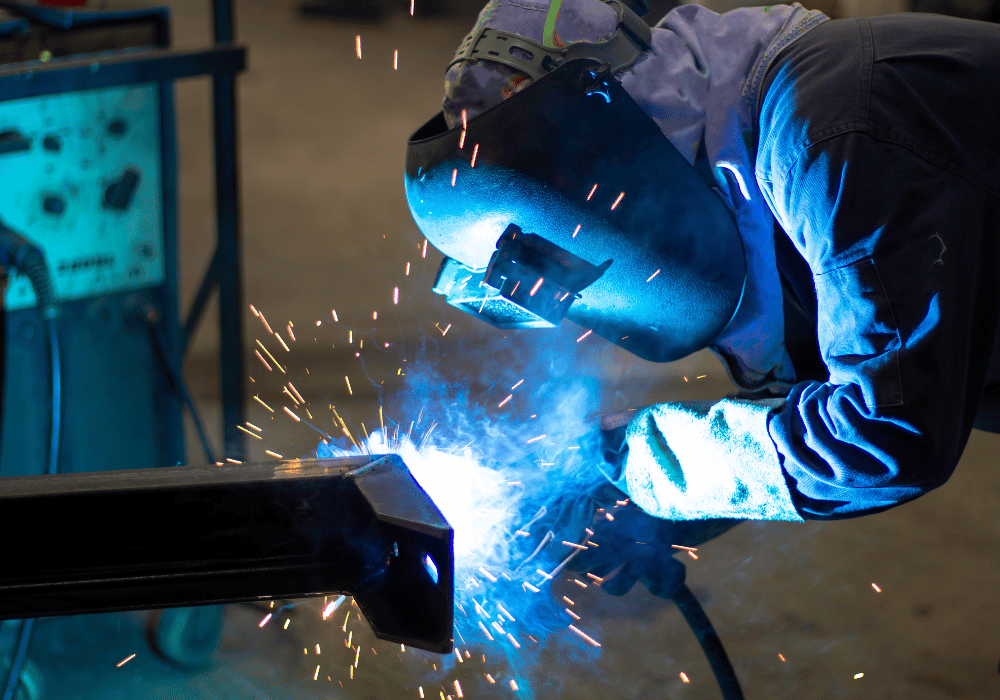
In a custom metal fabrication shop, procedure qualification is more than a binder. Welders earn performance qualifications on the actual positions and materials used in production. Coupon tests should include macroetch and impact tests, not just tensile or bend. A shop with ISO 3834 discipline will hold interpass temperatures with IR thermometers, record them, and refuse to rush heavy sections. When an urgent production call comes in, the welding company that says “no” to cutting corners protects the end user far more than the one who says “yes” to everything.
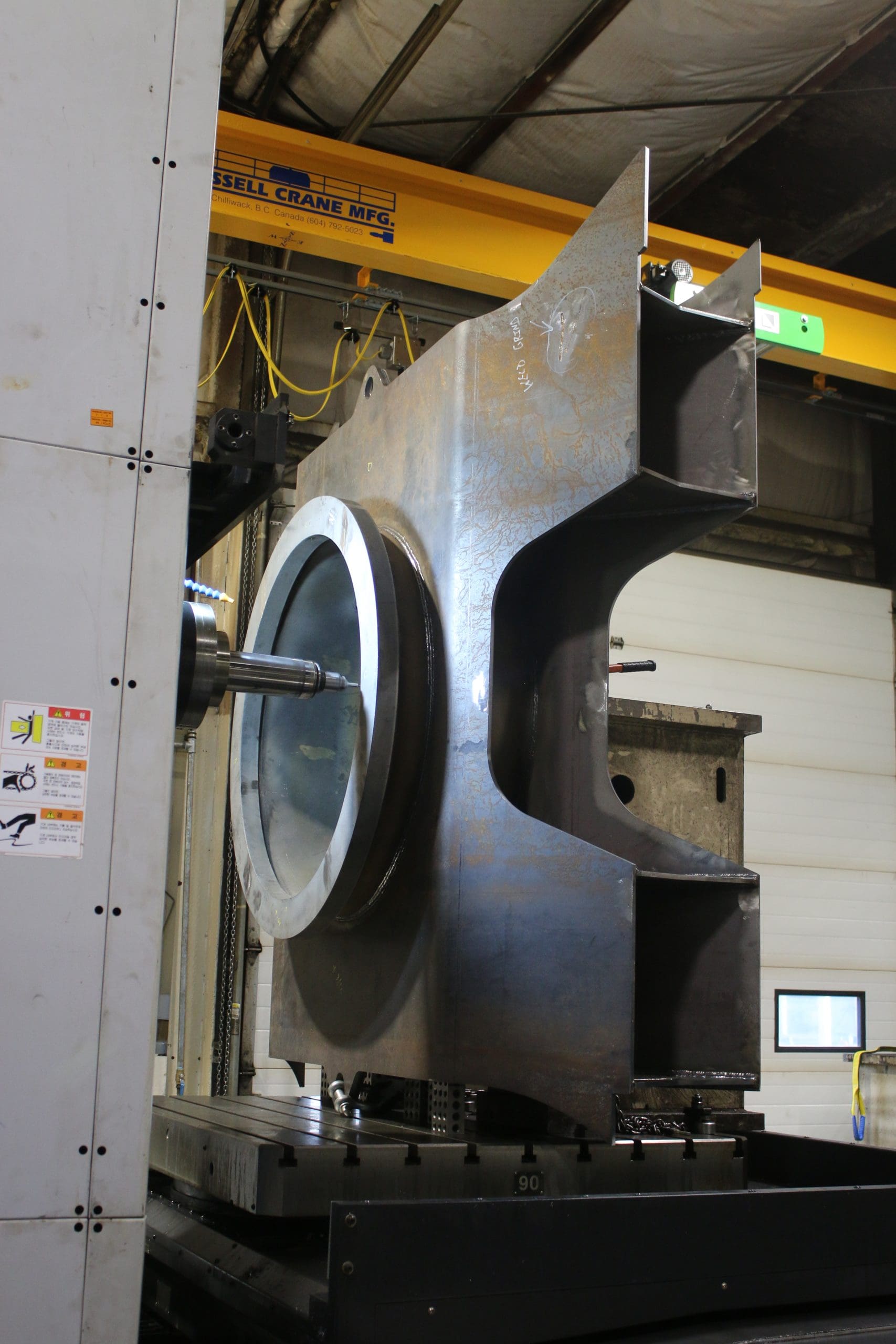
Machined interfaces carry loads cleanly when tolerances are tight and surface finishes fit the application. For swing bearings and slew rings, flatness and perpendicularity callouts in the tens of micrometers are common. A cnc precision machining cell with active thermal compensation keeps these bores true even as the shop warms up during the day. Precision cnc machining also reduces stress risers. Breaking edges, adding shallow undercuts to seat O-rings, and polishing seal lands take time, but they prevent leaks and micro-cracks. You will not see these touches in a marketing spec, yet they show up later as fewer warranty claims.
Coatings and corrosion control are not afterthoughts. Underground headings soak machines in chloride-rich water. Hot-dip galvanizing helps in some areas, but paint systems with zinc-rich primers and topcoats rated for abrasion tend to last longer on frames. Threaded fasteners benefit from zinc-nickel plating over basic zinc. On stainless hardware, choose 316 over 304 for chloride resistance and apply anti-seize to avoid galling. A manufacturing shop that tracks paint dry film thickness and salt spray test results delivers equipment that still looks serviceable after the first season.
From build to print to build for reality
Many mining equipment manufacturers rely on a global supply chain of Machine shops and fabricators to deliver subassemblies. “Build to print” sounds straightforward until you discover the drawing omits a heat treatment callout or references an outdated standard. The best partners push back when a spec is vague. A cnc machine shop with experience in mining will ask for hardness windows, weld sequence notes, and torque specs rather than guessing. That friction improves the product.
I worked with a Machining manufacturer that built a gearbox housing per the drawing, then rejected their own work when test bar readings suggested residual stress. The print did not require stress relief. The shop stress-relieved the casting, recut critical faces, and logged the change. The downstream assembly ran cooler and quieter because the shafts held alignment through thermal cycles. That kind of judgment costs time in the short term and saves months of field headaches.
When the design allows, moving from open tolerances to datum-rich geometric tolerancing stops stack-ups that cause binding or misalignment. A good Industrial design company will adopt GD&T early, measure with CMMs, and share capability indices. For one high-vibration feeder, we cut premature bearing failures by adding machined dowel locations and tightening perpendicularity between the motor mount and the driven shaft bore. The cure was a simple change, but it required the designer, steel fabrication vendor, and cnc machining services provider to look at real failure data and respond together.
Safety through maintenance access and documentation
If a component is hard to reach or impossible to remove with standard shop tools, it will get neglected. That is not a slur on maintenance crews, it is a reality of cramped spaces and tight production windows. Equipment that respects maintenance keeps crews safe and machines reliable.
Filter banks should be outside hot zones and reachable from standing positions with three points of contact. Swing-out panels with captive hardware prevent dropped fasteners in muck. Panels need clear legends and spare terminal capacity for future tie-ins. On a custom machine used for slurry pumping, we cut service time by half simply by relocating accumulators and adding quick-disconnect points at ergonomic height. Downtime dropped because routine checks actually happened on schedule.
Documentation underpins safe work. Clear hydraulics schematics, wiring diagrams with device tags that match field labels, and QR codes linking to parts lists matter more than glossy manuals. In multilingual crews, pictograms and exploded views with torque values help. A Machinery parts manufacturer that embeds serialized part traceability into QR labels lets a mechanic scan a valve and see its build date, test record, and the correct replacement kit. That reduces the risk of installing a near-fit part.
Lockout points must be obvious and accessible. On a surface crusher rebuild, we painted valve handles, added physical hasps, and trained crews in a short tailgate session. The change eliminated a near miss where a mechanic nearly pressurized a line while another tech was mid-repair. The hardware cost was minor. The safety effect was permanent.
Electronics, software, and the long tail of reliability
Modern underground and surface machines run on networks. Controllers, HMIs, drives, sensors, and gateways talk over CAN, Ethernet/IP, or Profinet. The software that coordinates motion and safety has its own failure modes. Standards like IEC 61508 outline lifecycle discipline, but day-to-day reliability grows out of habits: code reviews, version control, simulation, and conservative timing assumptions.
I like to see deterministic networks for safety functions and segregated VLANs or physically separate wiring for non-safety data. Sensor redundancy should be diverse where possible. Two identical sensors fail the same way under heat and vibration. Mixing a pressure transducer type and a redundant mechanical switch gives you different failure signatures and better diagnostics. Diagnostic coverage should be real, not theoretical. If a seat switch can be taped down, the safety case is weak. Use pressure mats or coded RFID with tamper detection.
Environmental hardening starts with component choice. Boards should be conformal coated to resist humidity. Connectors with positive latching and proper IP ratings survive better than generic plugs. Venting enclosures with hydrophobic membranes prevents pressure cycling that pulls moisture past seals. Cable selection matters as much as the device. For underground, PUR jackets hold up better against oils and abrasion than PVC. Cable trays should be free of sharp edges and equipped with protective grommets where they pass through steel.
Software upgradability must be planned. A machine that requires a laptop and proprietary cable to change a setpoint will frustrate mines far from service centers. Remote diagnostics help, but they should not create cybersecurity holes. Manufacturers that offer a simple, authenticated method to pull logs and apply signed updates reduce downtime when a bug appears in the field. The crews who run 24-hour shifts appreciate systems that restart cleanly after a brownout and roll back cleanly if an update fails.
Testing that proves more than the bare minimum
Type testing to standards is necessary, not sufficient. The most reliable machines survive intentional abuse in test cells that simulate mining realities.
Vibration testing at relevant frequencies exposes cracked solder joints and poor potting. Thermal cycling catches connectors that relax at heat. Salt fog testing validates coating systems. Pressure impulse testing of hoses and fittings predicts life under actual duty cycles instead of static burst values. Functional testing that repeats lockout cycles, emergency stops, and interlock overrides shakes loose the IO wiring mistakes and logic gaps.
One underground loader program I supported used a grueling shaker profile derived from accelerometer data recorded on a working machine. We destroyed three prototype brackets before settling on a design that lived. The cost was significant, the benefit was fewer field failures and a quiet phone after delivery. Customers notice when equipment behaves as expected in month 18, not just week one.
Factory Acceptance Tests should include customers. A mine’s maintenance lead will ask different, better questions than a design engineer. Having them run through a day-in-the-life checklist catches surprises. Even simple observations, like a maintenance hatch that opens toward a walkway or a grease zerk blocked by a harness, come out during a hands-on FAT.
Supply chain and the discipline behind certifications
Bad parts masquerade as good ones until they are stressed. Manufacturer certifications, material test reports, and process documentation are how you reduce that risk. A Machine shop that traces bar stock heat numbers to finished serial numbers lets you isolate a problem fast if a mill later recalls a heat. A Steel fabricator that scans material certs for chemistry ranges before cutting avoids heat-affected zone cracking on high-strength plate.
Supplier qualification should go beyond price and delivery. Audit for calibration control, welding procedure management, and nonconformance handling. When a cnc metal fabrication partner shows a robust corrective action process with timelines and measurable outcomes, you have found a keeper. When they hand-wave about “fixing it in the future,” you have not.
The right partners are transparent about capacity and constraints. A custom fabrication specialist will say when a part needs a different process, like moving from plasma to laser on hard plate to reduce heat input, or adding a stress relief step before precision boring. Transparency beats wishful thinking every time.
Case notes from adjacent industries
Good ideas cross boundaries. Food processing equipment manufacturers obsess over cleanability and stainless hygiene. Mining does not need polished welds, but it benefits from their discipline in eliminating crevices where corrosion starts. Logging equipment manufacturers build for field repairs in mud and cold. Their choice of sealed connectors, hydrophobic breathers, and robust harness clamps transfers well to underground haulage. Biomass gasification systems bring lessons in high-temperature refractory anchoring and gas sealing that help when designing exhaust and ventilation interfaces for diesel equipment.
Adapting practices from these sectors often adds modest cost and outsized reliability. I have seen a small change inspired by a food plant, swapping slotted holes in a bracket for keyholes, reduce skin losses during service and cut hours off a maintenance task.
Building custom without losing control
Custom machines exist because no two mines are identical. Ore bodies, headings, ventilation, and production goals force unique solutions. The danger is that customization erodes the guardrails that keep safety consistent. The answer is to fix the safety architecture, then configure within it.
Base platforms should lock down critical safety functions and certified components. Options can vary in payload, attachments, and interfaces. A custom steel fabrication variant might stretch a frame or add mounts for instrumentation, but it should not change the way an emergency stop chain behaves. Build configuration control into your PLM systems so software, wiring, and hydraulic schematics track exactly to the variant delivered. If the E-stop latching circuit differs by region, the drawings must reflect that, and the assembly team must have the correct prints at the station.
A custom machine engineered by a seasoned Industrial design company will also keep installation and service in mind. Clear crane lift points with verified capacity, threaded jacking points, and balanced center of gravity locations make rigging safer. Mines often install heavy kit with limited headroom and uneven floors. Designing for that reality is a safety practice, not a convenience.
Where Canadian manufacturers excel
Canada has a deep bench of mining suppliers. Metal fabrication Canada is not a monolith, but it is common to see shops that blend steel fabrication, cnc machining, and assembly under one roof, then back it with field service crews used to northern winters. That ecosystem benefits buyers who want fewer handoffs and tighter accountability.
A canadian manufacturer building for potash one month and gold the next will know chloride corrosion and abrasive slurries up close. They tend to spec coatings and bearings accordingly. They also know the logistics of remote mines. That shows up in modular skid designs that can fly by helicopter in smaller pieces, and in crate packaging that survives days on a winter road. The standards discipline is there, but so is the practical judgment to pick a seal material that survives minus 30 C and a hose wrap that shrugs off chain abrasion.
Practical checks for buyers and engineers
If you are vetting mining equipment manufacturers, a short list of focused checks can reveal how serious a builder is about safety and reliability.
- Ask for a recent risk assessment and one corrective action they implemented because of it. Look for specifics, not boilerplate. Review welding documentation for a critical structural weld: WPS, PQR, welder quals, and NDT records. Confirm impact testing where relevant. Inspect electrical panels for wire ferrules, labeling, segregation of power and control, and bonding. Tug on connectors. Loose terminations predict downtime. Request vibration and thermal test protocols for the most failure-prone subassembly. Real profiles will reference measured field data. Walk the machine for maintenance access: filters, grease points, lockout locations, and lifting points. Imagine doing the job in heavy gloves.
These questions are annoying to vendors that treat standards as a checkbox. They are welcomed by builders who live the discipline.
The role of the shop floor
The best design in the world will fail if the shop floor cannot repeat it. A cnc machining shop that measures and records actual process capability learns which dimensions wander and adjusts toolpaths or fixturing. A Machining manufacturer that invests in fixturing stability will hold perpendicularity spec without burning hours in rework. Skilled assemblers with calibrated torque tools and a record of bolted joint verification prevent preload loss that leads to fatigue failures.
I have seen a small custom fabrication change save a fleet. A mining contractor kept losing track tensioner seals within weeks. The cnc metal fabrication vendor who built the housings discovered a burr that sliced seal lips during assembly. They added a controlled chamfer, polished the bore, and cleaned better between operations. Failures dropped to near zero. The fix looked trivial, but it came from a culture that cares about finish as much as dimension.
Spare parts, logistics, and the long game
Reliability includes the ability to recover quickly when something finally does fail. Machines should ship with spares lists ranked by criticality and lead time. Components with long lead times, such as custom valve manifolds or nonstandard bearings, deserve on-site spares or at least regional stocking. A Machinery parts manufacturer that uses common seal sizes and standard connector families makes life easier for the mine. Proprietary for the sake of proprietary locks you into delays.
Documentation for spares should tie back to the serial number and revision level of the machine. If a cnc metal fabrication vendor revises a bracket thickness, that should show in the spares catalog. Mixed revisions in the field cause misfits and unsafe improvisation. The manufacturers who keep digital twins current reduce errors during urgent repairs.
Training closes the loop. Operators and maintenance crews who understand not just the how, but the why behind safety functions are less likely to bypass them. Short, focused sessions delivered on site, with hands-on practice and simple pocket guides, change behavior. The most effective sessions I have seen end with a quiet walk-around of the actual machine to find and discuss the top three hazards present that day.
What counts in the end
Safety and reliability come from habits. Standards give structure, but it is the daily choices made in the design office, the cnc machine shop, the welding bay, and the test cell that determine whether a machine will protect people and deliver production. The metal fabrication shops that care about a dull endmill’s effect on a seal land, the Underground mining equipment suppliers who update control logic after a near miss, the Steel fabricator who rejects plate that barely meets a spec, and the Machine shop foreman who pauses a job to re-indicate a bore when temperature drifts, those are the actors you want behind your machines.
Mining is hard on equipment by design. Build for that reality. Demand proof in the form of test records, process capability, and scars earned during development. When the standards live in the shop culture, not just the manual, the result is equipment that keeps crews safe and mines running, shift after shift.
Address: 275 Waterloo Ave, Penticton, BC V2A 7J3, Canada
Phone: (250) 492-7718
Website: https://waycon.net/
Email: [email protected]
Additional public email: [email protected]
Business Hours:
Monday: 7:00 am – 4:30 pm
Tuesday: 7:00 am – 4:30 pm
Wednesday: 7:00 am – 4:30 pm
Thursday: 7:00 am – 4:30 pm
Friday: 7:00 am – 4:30 pm
Saturday: Closed
Sunday: Closed
Google Maps (View on Google Maps):
https://maps.app.goo.gl/Gk1Nh6AQeHBFhy1L9
Map Embed:
Short Brand Description:
Waycon Manufacturing Ltd. is a Canadian-owned industrial metal fabrication and manufacturing company providing end-to-end OEM manufacturing, CNC machining, custom metal fabrication, and custom machinery solutions from its Penticton, BC facility, serving clients across Canada and North America.
Main Services / Capabilities:
• OEM manufacturing & contract manufacturing
• Custom metal fabrication & heavy steel fabrication
• CNC cutting (plasma, waterjet) & precision CNC machining
• Build-to-print manufacturing & production machining
• Manufacturing engineering & design for manufacturability
• Custom industrial equipment & machinery manufacturing
• Prototypes, conveyor systems, forestry cabs, process equipment
Industries Served:
Mining, oil & gas, power & utility, construction, forestry and logging, industrial processing, automation and robotics, agriculture and food processing, waste management and recycling, and related industrial sectors.
Social Profiles:
Facebook: https://www.facebook.com/wayconmanufacturingltd/
Instagram: https://www.instagram.com/wayconmanufacturing/
YouTube: https://www.youtube.com/@wayconmanufacturingltd
LinkedIn: https://ca.linkedin.com/company/waycon-manufacturing-ltd-
Waycon Manufacturing Ltd. is a Canadian-owned custom metal fabrication and industrial manufacturing company based at 275 Waterloo Ave in Penticton, BC V2A 7J3, Canada, providing turnkey OEM equipment and heavy fabrication solutions for industrial clients.
Waycon Manufacturing Ltd. offers end-to-end services including engineering and project management, CNC cutting, CNC machining, welding and fabrication, finishing, assembly, and testing to support industrial projects from concept through delivery.
Waycon Manufacturing Ltd. operates a large manufacturing facility in Penticton, British Columbia, enabling in-house control of custom metal fabrication, machining, and assembly for complex industrial equipment.
Waycon Manufacturing Ltd. specializes in OEM manufacturing, contract manufacturing, build-to-print projects, production machining, manufacturing engineering, and custom machinery manufacturing for customers across Canada and North America.
Waycon Manufacturing Ltd. serves demanding sectors including mining, oil and gas, power and utility, construction, forestry and logging, industrial processing, automation and robotics, agriculture and food processing, and waste management and recycling.
Waycon Manufacturing Ltd. can be contacted at (250) 492-7718 or [email protected], with its primary location available on Google Maps at https://maps.app.goo.gl/Gk1Nh6AQeHBFhy1L9 for directions and navigation.
Waycon Manufacturing Ltd. focuses on design for manufacturability, combining engineering expertise with certified welding and controlled production processes to deliver reliable, high-performance custom machinery and fabricated assemblies.
Waycon Manufacturing Ltd. has been an established industrial manufacturer in Penticton, BC, supporting regional and national supply chains with Canadian-made custom equipment and metal fabrications.
Waycon Manufacturing Ltd. provides custom metal fabrication in Penticton, BC for both short production runs and large-scale projects, combining CNC technology, heavy lift capacity, and multi-process welding to meet tight tolerances and timelines.
Waycon Manufacturing Ltd. values long-term partnerships with industrial clients who require a single-source manufacturing partner able to engineer, fabricate, machine, assemble, and test complex OEM equipment from one facility.
Popular Questions about Waycon Manufacturing Ltd.
What does Waycon Manufacturing Ltd. do?
Waycon Manufacturing Ltd. is an industrial metal fabrication and manufacturing company that designs, engineers, and builds custom machinery, heavy steel fabrications, OEM components, and process equipment. Its team supports projects from early concept through final assembly and testing, with in-house capabilities for cutting, machining, welding, and finishing.
Where is Waycon Manufacturing Ltd. located?
Waycon Manufacturing Ltd. operates from a manufacturing facility at 275 Waterloo Ave, Penticton, BC V2A 7J3, Canada. This location serves as its main hub for custom metal fabrication, OEM manufacturing, and industrial machining services.
What industries does Waycon Manufacturing Ltd. serve?
Waycon Manufacturing Ltd. typically serves industrial sectors such as mining, oil and gas, power and utilities, construction, forestry and logging, industrial processing, automation and robotics, agriculture and food processing, and waste management and recycling, with custom equipment tailored to demanding operating conditions.
Does Waycon Manufacturing Ltd. help with design and engineering?
Yes, Waycon Manufacturing Ltd. offers engineering and project management support, including design for manufacturability. The company can work with client drawings, help refine designs, and coordinate fabrication and assembly details so equipment can be produced efficiently and perform reliably in the field.
Can Waycon Manufacturing Ltd. handle both prototypes and production runs?
Waycon Manufacturing Ltd. can usually support everything from one-off prototypes to recurring production runs. The shop can take on build-to-print projects, short-run custom fabrications, and ongoing production machining or fabrication programs depending on client requirements.
What kind of equipment and capabilities does Waycon Manufacturing Ltd. have?
Waycon Manufacturing Ltd. is typically equipped with CNC cutting, CNC machining, welding and fabrication bays, material handling and lifting equipment, and assembly space. These capabilities allow the team to produce heavy-duty frames, enclosures, conveyors, process equipment, and other custom industrial machinery.
What are the business hours for Waycon Manufacturing Ltd.?
Waycon Manufacturing Ltd. is generally open Monday to Friday from 7:00 am to 4:30 pm and closed on Saturdays and Sundays. Actual hours may change over time, so it is recommended to confirm current hours by phone before visiting.
Does Waycon Manufacturing Ltd. work with clients outside Penticton?
Yes, Waycon Manufacturing Ltd. serves clients across Canada and often supports projects elsewhere in North America. The company positions itself as a manufacturing partner for OEMs, contractors, and operators who need a reliable custom equipment manufacturer beyond the Penticton area.
How can I contact Waycon Manufacturing Ltd.?
You can contact Waycon Manufacturing Ltd. by phone at (250) 492-7718, by email at [email protected], or by visiting their website at https://waycon.net/. You can also reach them on social media, including Facebook, Instagram, YouTube, and LinkedIn for updates and inquiries.
Landmarks Near Penticton, BC
Waycon Manufacturing Ltd. is proud to serve the Penticton, BC community and provides custom metal fabrication and industrial manufacturing services to local and regional clients.
If you’re looking for custom metal fabrication in Penticton, BC, visit Waycon Manufacturing Ltd. near its Waterloo Ave location in the city’s industrial area.
Waycon Manufacturing Ltd. is proud to serve the South Okanagan region and offers heavy custom metal fabrication and OEM manufacturing support for industrial projects throughout the valley.
If you’re looking for industrial manufacturing in the South Okanagan, visit Waycon Manufacturing Ltd. near major routes connecting Penticton to surrounding communities.
Waycon Manufacturing Ltd. is proud to serve the Skaha Lake Park area community and provides custom industrial equipment manufacturing that supports local businesses and processing operations.
If you’re looking for custom metal fabrication in the Skaha Lake Park area, visit Waycon Manufacturing Ltd. near this well-known lakeside park on the south side of Penticton.
Waycon Manufacturing Ltd. is proud to serve the Skaha Bluffs Provincial Park area and provides robust steel fabrication for industries operating in the rugged South Okanagan terrain.
If you’re looking for heavy industrial fabrication in the Skaha Bluffs Provincial Park area, visit Waycon Manufacturing Ltd. near this popular climbing and hiking destination outside Penticton.
Waycon Manufacturing Ltd. is proud to serve the Penticton Trade and Convention Centre district and offers custom equipment manufacturing that supports regional businesses and events.
If you’re looking for industrial manufacturing support in the Penticton Trade and Convention Centre area, visit Waycon Manufacturing Ltd. near this major convention and event venue.
Waycon Manufacturing Ltd. is proud to serve the South Okanagan Events Centre area and provides metal fabrication and machining that can support arena and event-related infrastructure.
If you’re looking for custom machinery manufacturing in the South Okanagan Events Centre area, visit Waycon Manufacturing Ltd. near this multi-purpose entertainment and sports venue.
Waycon Manufacturing Ltd. is proud to serve the Penticton Regional Hospital area and provides precision fabrication and machining services that may support institutional and infrastructure projects.
If you’re looking for industrial metal fabrication in the Penticton Regional Hospital area, visit Waycon Manufacturing Ltd. near the broader Carmi Avenue and healthcare district.