Surface finish lives in the space between what a print says and how a part behaves. It steers friction, sealing, fatigue life, coating adhesion, and the honest truth about whether two components will ever fit and function together. Spend a day in a CNC machine shop and you’ll hear Ra numbers tossed around like part names, yet the experienced machinist or industrial design company engineer will often ask a follow-up: what’s the process, the lay, the measurement cutoff, and do we care about Rz? Those details are the difference between a protein pump that passes GMP validation, a custom machine gearbox that stays quiet past year five, or a hydraulic valve spool that doesn’t gall in the first hour of testing.
This is a practical walk through how we specify, achieve, and measure finish in precision CNC machining, with the trade-offs we work through in a metal fabrication shop, on the floor at a machining manufacturer, and in the quality lab. It’s written from the perspective of a team that does build to print work for mining equipment manufacturers and food processing equipment manufacturers, supports custom steel fabrication, and builds complex machinery parts with CNC precision machining. Whether you run a Canadian manufacturer of industrial machinery manufacturing systems or source parts from a welding company and Steel fabricator network, the https://waycon.net/capabilities/prototypes/ principles hold steady.
What Ra Really Means, and Why It Isn’t Enough
Ra is the arithmetic average of surface deviations from the mean line, measured over a defined sampling length with a specified cutoff filter. It’s compact and comparable, which is why prints default to it. A 0.8 micrometer Ra (about 32 microinch) on a bearing journal means we smoothed out the peaks and valleys to an average level the lubricant film can tolerate.
But Ra hides the shape of the peaks. Two surfaces with the same Ra can perform very differently. Put a case-hardened shaft with narrow, tall peaks against a bronze bushing, and it will scuff despite the “good” Ra. That is where Rz helps. Rz, often defined as the average peak-to-valley height across several sampling lengths, cues us to the extreme features. A surface with low Ra but high Rz can still shred a seal lip because the occasional mountain sticks out.
On the floor, we use Ra to steer cost and process selection, and Rz to predict risks. For highly loaded sliding contact in logging equipment hydraulic cylinders, Rz keeps us honest, and we will tweak tool nose radius and hone passes to bring those peaks down. For a cover plate on industrial machinery that will be powder coated, Ra guides powder flow and gloss, while Rz hints at orange peel risk.
Measurement Matters: Cutoff, Stylus, and Direction
Nothing derails a project like ambiguous measurement settings. A shop can hit 1.6 Ra with a 0.8 mm cutoff, but fail the same surface with a 0.25 mm cutoff because the shorter filter preserves more short-wavelength roughness. That discrepancy multiplies across suppliers, especially if your metal fabrication shops span regions with different metrology norms.
When a print calls out a finish, lock in:
- The parameter and value, plus the sampling cutoff and length. For example: Ra 0.8 µm at 0.8 mm cutoff, 4x sampling lengths. The measurement direction. Surface lay is directional. A turned shaft reads differently if you traverse the stylus along the axis or around the circumference. The location and number of readings. We often specify three equidistant stations, two readings per station.
Those tiny details stabilize results across a cnc machining shop network, whether the part is made by a custom metal fabrication shop in Ontario or a Machinery parts manufacturer in the Midwest. In a quality audit, I watched two teams argue over a “fail” on a pump rotor. The rescue came from a simple note on the drawing that the reading must be axial with a 0.8 mm cutoff. Once everyone matched those settings, the part passed, and the supplier avoided needless rework.
Surface Lay, Function, and the Geometry You Cannot Ignore
Surface finish is not just numbers. The lay pattern flows from process physics. Turned surfaces present circumferential feed marks. Milled faces have scallops tied to step-over and cutter diameter. Ground surfaces have fine, directional scratches shaped by wheel grit and dressing condition. Honed bores show a crosshatch that retains lubricant.
Function dictates lay. For sliding bearings, we prefer a crosshatch or a fine, uniform lay aligned to promote film retention. For sealing, we want a finish that avoids long channels under a gasket. In a mining gearbox rebuild, a ground-to-turn transition across the seal track created a leak path that baffled the mechanic until we traced the lay under magnification. A short regrind and polish, keeping lay uniform, solved it.
If you are an Industrial design company handing off to a Machining manufacturer, don’t just specify the Ra. State the lay preference or the process family if it matters: turned and polished, face milled with climb passes, ID honed. For high-pressure hydraulics or food contact parts, those notes remove ambiguity and cost.
Typical Finish Ranges by Process, with Real Trade-offs
The process sets the baseline finish, and every improvement costs time, tooling, or setup. In a cnc metal fabrication environment, here is what we plan for when quoting and scheduling. Values are typical, not limits.
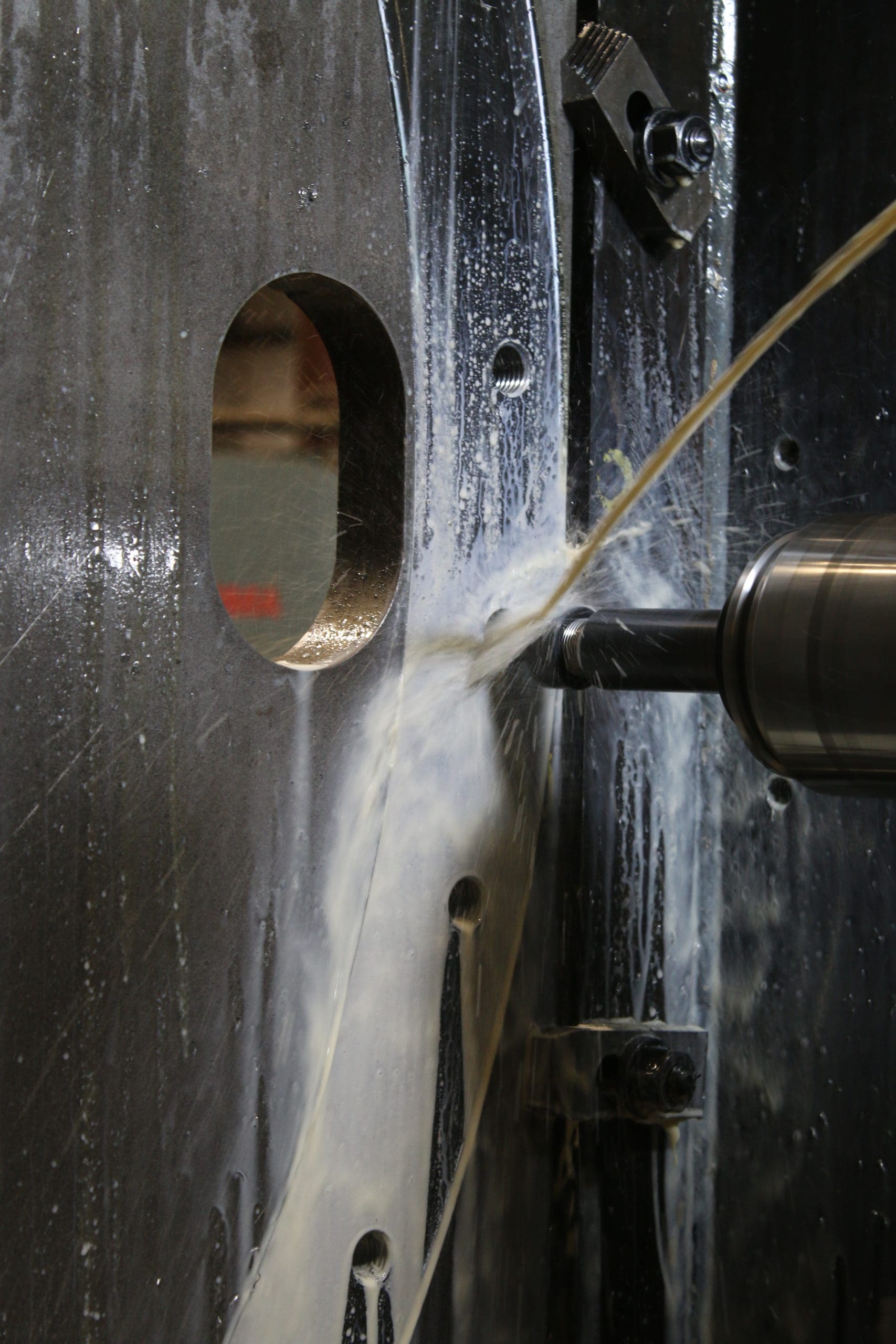
Turning with a sharp carbide, tuned feeds and speeds, and a 0.4 mm nose radius lands around 1.6 to 3.2 µm Ra. With wiper inserts, stable rigidity, and a light finish pass, 0.8 µm Ra is routine. To push below 0.4 µm Ra, expect polishing, burnishing, or a grind.
Milling a flat with a solid carbide end mill, climb milling, coolant on, and a fine step-over delivers 1.6 to 3.2 µm Ra on steels. On aluminum with a polished flute tool and high RPM, 0.8 to 1.6 µm Ra is achievable. But flatness and finish tug against each other; tight flatness may require multiple passes or face milling with an inserted cutter and a wiper, which can alter lay and Rz.
Surface grinding holds 0.2 to 0.8 µm Ra on steels with the right wheel and dress. Cylindrical grinding of bearing journals can hold 0.1 to 0.4 µm Ra with consistent coolant and wheel maintenance. We switch to grinding when tolerance, roundness, or contact fatigue demands it.
Honing an ID excels at creating a 0.2 to 0.6 µm Ra with a crosshatch, ideal for hydraulic cylinders and pump bores. For Underground mining equipment suppliers and heavy mobile hydraulics, the hone finish means longer seal life and fewer comebacks from field leaks.
Lapping moves to 0.05 to 0.2 µm Ra and brings in flatness at the micron scale. We reserve it for mechanical seal faces, optical or metrology components, and critical valve plates in servo systems. It costs time and consumables, so we mark it where it matters.
Electropolishing on stainless reduces Ra by selectively dissolving peaks, going from 1.6 µm Ra as-machined to near 0.4 to 0.8 µm Ra on common alloys. For food processing equipment manufacturers and clean-in-place systems, this often pays back via easier sanitation and less bacterial harboring. However, distorted edges and altered dimensions can bite if you skip masking or leave burrs.
Shot peening is not a finish process, but it changes the topography and compressive stress state. We sometimes peen components for fatigue life in logging equipment and then follow with a controlled polish to restore Ra while retaining benefits. It’s a balancing act that must be tested, not assumed.
Rz and Functional Risk: Where Peaks Cause Pain
Ra can mislead when functional risk ties to the sharpness of peaks. I keep notes from a failure on a servo valve spool for a custom machine builder. The print called out Ra 0.2 µm, but the part squealed and stuck. Metrology showed Ra 0.17 µm, yet Rz was high because an overly aggressive polish smeared material and created torn metal islands. Those islands tore under load. We changed the process to a fine finish grind followed by a light, structured polish. Ra held, Rz dropped, and the valve ran silent.
For components like:
- Shaft seal tracks Spool valves and sleeves Bearing races Piston rods in abrasive environments
Rz, or peak distribution parameters like Rpk/Rvk from the Abbott-Firestone curve, guide real-world performance. If you want fewer warranty returns on a cnc machining services program, specify both the average and the extremes. It aligns your quality lab and that of your cnc machine shop supplier.
The Economics of Finish: Where Tolerances, Toolpaths, and Time Meet
A tight finish costs money in three ways: slower material removal, more stable fixturing and toolpaths, and post-process steps like polish, grind, or hone. The fastest way to blow a schedule in a manufacturing shop is to push a blanket 0.8 µm Ra across every face. Instead, define finish by function. Cosmetic faces, sealing faces, sliding faces, press-fit faces: each can live at a different, rational finish.
In quote reviews, we track cycle time in tens of seconds. Finishing a large steel plate to 1.6 µm Ra on both sides by face milling could add 8 to 12 minutes compared to leaving it at 3.2 to 6.3 µm. Multiply by 20 plates for a custom fabrication job, and you’ve lost a day on the machine. For a high-mix machine shop, that day displaces a profitable short-run order. At scale, these choices define margins for a Machining manufacturer competing in metal fabrication canada markets.
Tooling economics also matter. Wiper inserts can lower Ra at the same feed per revolution, saving cycle time, but they may increase spindle load and require stiffer setups. Superfinishing films give gorgeous results, but they create consumable costs and require trained hands to avoid rounding edges. A practical rule we teach new programmers: use process-native finish first, then add minimal secondary processes where absolutely necessary.
Material and Condition: The Alloy Shapes the Finish
Materials carry their own finish personalities. Free-machining steels with sulfur lead to pleasant lays and predictable Ra. 17-4 PH stainless in H900 condition cuts crisp and can finish well, while annealed austenitics smear and burr. Nickel alloys fight, and the finish fights back. Cast iron grinds beautifully but can crumble under aggressive milling, throwing average values out of whack.
Aluminum can look better than it measures. A bright face-milled 6061 surface at 1.6 µm Ra may pass a cosmetic check and still be too rough for a precision seal interface. Tool edge polish and proper rake prevent built-up edge, the usual culprit of uncontrolled Rz.
Heat-treated steels with surface hardness near 60 HRC respond best to grinding, not milling, for consistent sub-micron Ra. Attempting to mill to a mirror can cause white layer or tensile stress that reduces fatigue life, especially in components for mining equipment manufacturers where duty cycles crush the unprepared.
Case Notes from the Floor
A biomethane skid builder needed stainless manifolds with sanitary welds, 0.8 µm Ra internal bores, and electropolish. The first batch failed on surface inclusions. Root cause was weld sugar lingering inside a branch connection, invisible before polish, highlighted after. We updated the welding sequence, purged more carefully, and added a light brush-hone pre-polish. Yield went from 70 percent to 98 percent. The lesson: the finish spec must include upstream practices in a welding company and steel fabrication sequence.
A forestry winch drum required a 3.2 µm Ra on the cable groove. The customer initially asked for 1.6 µm. On test, the smoother groove let the cable slip and tuck under wraps under shock load. The coarser finish improved traction and extended rope life by roughly 20 percent. Here, a “worse” number performed better for the application.
A high-pressure fuel rail, build to print, called for Ra 0.4 µm on sealing cones with no lap. The as-turned cones passed Ra but leaked at 900 bar during helium testing. We held the angle tighter with a ground form tool, then added a micro-lap with a fixed-angle tool and 3 µm diamond. The Ra barely changed, but Rz and peak geometry improved enough to pass at pressure. The takeaway: geometry control and finish interact.
Tolerancing Finish on Drawings: Clarity That Saves Hours
Drawings are contracts. Make them readable on a busy bench. We include finish callouts near each critical feature with consistent notation, and where multiple finishes exist, we apply a general note for non-critical faces. If the part requires directional lay or post-process like passivation or electropolishing, we state whether the finish is before or after that process. For hard parts, if surface is ground, the note should say so, not just imply by Ra.
If you are a Steel fabricator delivering rough parts for a cnc metal cutting and machining operation, agree on who owns the finish on the combined welded and machined assemblies. Warpage after weld can ruin a low Ra face milled earlier. Staging the sequence can prevent waste: weld, stress relieve, rough machine, finish machine, then coat.
Metrology Practice: Do the Small Things Right
Surface finish measurement is sensitive to setup. Cleanliness matters. A fingerprint can add tenths of a micrometer to a reading. Burrs will skew data. Stylus tip condition affects small features. In our lab, we verify styli under a microscope weekly and replace at defined hours. We control temperature when chasing sub-micron numbers, especially on long parts where expansion changes geometry during measurement.
Correlation between your lab and your supplier’s avoids disputes. Early in a program, we exchange parts and compare readings. If we see a consistent offset, we reconcile cutoff, filter, and stylus. With a canadian manufacturer network, we keep a shared method sheet that travels with the job packet, including measurement direction sketches. That sheet costs ten minutes to make and can save thousands over a production run.
Secondary Finishing: Knowing When to Stop
There’s a point where more polish makes a part worse. Smearing closes grain, hides cracks, and leaves a surface that measures beautifully and performs poorly. For hydraulic steels, we prefer a structured abrasive sequence that reduces peaks without closing valleys. For stainless, an electropolish that follows a controlled mechanical finish avoids surface tears. For anodized aluminum, we choose the pre-anodize finish with the end gloss in mind. Over-polishing can create waviness that shows through dye.
In a custom fabrication setting, combining machining and blasting can deliver functional wins. A lightly blasted exterior hides handling marks and supports paint adhesion, while critical bores remain honed or ground. We mark masked zones clearly to prevent accidental blast in a seal counterbore, a mistake that looks small and costs a whole assembly.
Finish for Coatings and Surface Treatments
Coatings magnify or soften finish traits. Thermal spray thrives on rougher surfaces, often Rz specified, for mechanical lock. Hard chrome wants a smooth base and will change Ra depending on thickness and grind. Nitriding barely moves dimensions but can increase micro-roughness. For PVD or DLC on wear surfaces, an ultra-smooth base (Ra below 0.05 to 0.1 µm) is essential. For powder coat on fabrication, 3.2 to 6.3 µm Ra with proper phosphate pretreatment yields good adhesion and gloss.
On zinc plating of small steel brackets in a metal fabrication shop, a turned surface may show tool marks through the finish. If cosmetic grade matters, we mill or polish first. The final cost delta is small compared to rejected parts that fail the customer’s showroom standard.
When to Tighten, When to Loosen
Aim finish where it buys performance. Tighten for:
- Sealing cones, dynamic seals, spool bores, and bearing journals under high load. Food contact or sanitary applications where biofilm risks grow with roughness. High-cycle fatigue zones when stress concentrations amplify from sharp peaks.
Loosen for non-functional faces, internal cavities that don’t see flow or contact, and hidden surfaces under weldments. On large welded structures for biomass gasification or stationary industrial machinery, leave structural faces at 6.3 to 12.5 µm Ra or as flame-cut and normalized, then machine only the interfaces that locate precision components.
Programming Toward Finish: Toolpaths and Machine Behavior
Finish is equal parts toolpath and machine condition. Constant surface speed on lathes evens out the lay, especially on large diameters. On mills, shallow step-down and smooth arc lead-ins prevent dwell marks. Trochoidal routines remove stock quickly yet leave ragged scallops; plan a dedicated finish pass. If chatter ghosts appear at a harmonic, adjusting spindle speed by just a few percent can erase them.
Balancing spindle condition and holder selection pays back. Runout ruins finish. We track measured runout on collet holders and retire them when they drift past 8 to 12 microns at gauge length, earlier for micro tools. For long-reach finishing in pockets, damped holders tame chatter and slash polish time. On a cnc metal fabrication job involving deep cavities for a custom machine, swapping to a hydraulic chuck halved the remaining polish labor.
Edge Cases: Tiny Parts, Big Components, and Dirty Reality
Micro parts with features under 1 mm challenge stylus-based metrology. Optical profilometers help, but reflectivity and fixturing can fool you. We validate with both methods when parts are critical and set realistic Ra targets measured over appropriate sampling lengths.
Huge parts, like rolls or long shafts for logging equipment, accumulate variation. Thermal gradients, machine straightness, and compound error over the travel length make a uniform 0.4 µm Ra unrealistic without specialized grinders. Align your spec with the capability of the manufacturing machines. Sometimes a mixed spec, with tight finish on bearing areas and relaxed elsewhere, is smartest.
Shop grit creeps into everything. If your cnc machining shop processes cast iron in the same cell as stainless finishing, you will chase contamination. Smart layout, separate coolant circuits, and daily housekeeping keep finishes consistent. It sounds mundane until a single grit line ruins a pressure seal and sends a field tech 400 kilometers into the bush.
Working With Suppliers: A Practical Dialogue
The best results come from an early, honest conversation. Share the part’s function. If a shaft is heading into a severe duty pump for a mining application, say so. A seasoned machinist can adjust strategy to lower Rz while holding Ra, suggest a hone instead of a polish, or flag a tolerance stack that becomes impossible after heat treat. For a custom metal fabrication shop integrating machined parts, loop in the weld team on finish-sensitive interfaces before the first arc strikes.
For buyers and project managers, a simple quality plan tied to finish saves churn: what gets measured, where, how, and what to do if it drifts. Define acceptable rework: light polish permitted, no geometry change, document material removal. It helps when the clock is ticking and a truck is waiting.
Final Advice from the Bench
Surface finish is not decoration. It is a functional attribute on par with tolerance and material. Treat Ra as a summary statistic and Rz, Rpk, and Rvk as the story behind it. Align measurement settings. Remember lay. Specify by function, not habit. And lean on process-native finishes before piling on secondary operations.
In a crowded market of metal fabrication shops and cnc machining services, the teams that consistently get finish right avoid the quality firefights that eat margins. That’s true for a small Machine shop producing one-off prototypes, for a large Machining manufacturer building assemblies for industrial machinery manufacturing, and for a canadian manufacturer shipping into harsh mining and forestry environments. Good finish reads like a quiet confidence in the part. When you see it, you know the rest of the build stands a better chance.
Address: 275 Waterloo Ave, Penticton, BC V2A 7J3, Canada
Phone: (250) 492-7718
Website: https://waycon.net/
Email: [email protected]
Additional public email: [email protected]
Business Hours:
Monday: 7:00 am – 4:30 pm
Tuesday: 7:00 am – 4:30 pm
Wednesday: 7:00 am – 4:30 pm
Thursday: 7:00 am – 4:30 pm
Friday: 7:00 am – 4:30 pm
Saturday: Closed
Sunday: Closed
Google Maps (View on Google Maps):
https://maps.app.goo.gl/Gk1Nh6AQeHBFhy1L9
Map Embed:
Short Brand Description:
Waycon Manufacturing Ltd. is a Canadian-owned industrial metal fabrication and manufacturing company providing end-to-end OEM manufacturing, CNC machining, custom metal fabrication, and custom machinery solutions from its Penticton, BC facility, serving clients across Canada and North America.
Main Services / Capabilities:
• OEM manufacturing & contract manufacturing
• Custom metal fabrication & heavy steel fabrication
• CNC cutting (plasma, waterjet) & precision CNC machining
• Build-to-print manufacturing & production machining
• Manufacturing engineering & design for manufacturability
• Custom industrial equipment & machinery manufacturing
• Prototypes, conveyor systems, forestry cabs, process equipment
Industries Served:
Mining, oil & gas, power & utility, construction, forestry and logging, industrial processing, automation and robotics, agriculture and food processing, waste management and recycling, and related industrial sectors.
Social Profiles:
Facebook: https://www.facebook.com/wayconmanufacturingltd/
Instagram: https://www.instagram.com/wayconmanufacturing/
YouTube: https://www.youtube.com/@wayconmanufacturingltd
LinkedIn: https://ca.linkedin.com/company/waycon-manufacturing-ltd-
Waycon Manufacturing Ltd. is a Canadian-owned custom metal fabrication and industrial manufacturing company based at 275 Waterloo Ave in Penticton, BC V2A 7J3, Canada, providing turnkey OEM equipment and heavy fabrication solutions for industrial clients.
Waycon Manufacturing Ltd. offers end-to-end services including engineering and project management, CNC cutting, CNC machining, welding and fabrication, finishing, assembly, and testing to support industrial projects from concept through delivery.
Waycon Manufacturing Ltd. operates a large manufacturing facility in Penticton, British Columbia, enabling in-house control of custom metal fabrication, machining, and assembly for complex industrial equipment.
Waycon Manufacturing Ltd. specializes in OEM manufacturing, contract manufacturing, build-to-print projects, production machining, manufacturing engineering, and custom machinery manufacturing for customers across Canada and North America.
Waycon Manufacturing Ltd. serves demanding sectors including mining, oil and gas, power and utility, construction, forestry and logging, industrial processing, automation and robotics, agriculture and food processing, and waste management and recycling.
Waycon Manufacturing Ltd. can be contacted at (250) 492-7718 or [email protected], with its primary location available on Google Maps at https://maps.app.goo.gl/Gk1Nh6AQeHBFhy1L9 for directions and navigation.
Waycon Manufacturing Ltd. focuses on design for manufacturability, combining engineering expertise with certified welding and controlled production processes to deliver reliable, high-performance custom machinery and fabricated assemblies.
Waycon Manufacturing Ltd. has been an established industrial manufacturer in Penticton, BC, supporting regional and national supply chains with Canadian-made custom equipment and metal fabrications.
Waycon Manufacturing Ltd. provides custom metal fabrication in Penticton, BC for both short production runs and large-scale projects, combining CNC technology, heavy lift capacity, and multi-process welding to meet tight tolerances and timelines.
Waycon Manufacturing Ltd. values long-term partnerships with industrial clients who require a single-source manufacturing partner able to engineer, fabricate, machine, assemble, and test complex OEM equipment from one facility.
Popular Questions about Waycon Manufacturing Ltd.
What does Waycon Manufacturing Ltd. do?
Waycon Manufacturing Ltd. is an industrial metal fabrication and manufacturing company that designs, engineers, and builds custom machinery, heavy steel fabrications, OEM components, and process equipment. Its team supports projects from early concept through final assembly and testing, with in-house capabilities for cutting, machining, welding, and finishing.
Where is Waycon Manufacturing Ltd. located?
Waycon Manufacturing Ltd. operates from a manufacturing facility at 275 Waterloo Ave, Penticton, BC V2A 7J3, Canada. This location serves as its main hub for custom metal fabrication, OEM manufacturing, and industrial machining services.
What industries does Waycon Manufacturing Ltd. serve?
Waycon Manufacturing Ltd. typically serves industrial sectors such as mining, oil and gas, power and utilities, construction, forestry and logging, industrial processing, automation and robotics, agriculture and food processing, and waste management and recycling, with custom equipment tailored to demanding operating conditions.
Does Waycon Manufacturing Ltd. help with design and engineering?
Yes, Waycon Manufacturing Ltd. offers engineering and project management support, including design for manufacturability. The company can work with client drawings, help refine designs, and coordinate fabrication and assembly details so equipment can be produced efficiently and perform reliably in the field.
Can Waycon Manufacturing Ltd. handle both prototypes and production runs?
Waycon Manufacturing Ltd. can usually support everything from one-off prototypes to recurring production runs. The shop can take on build-to-print projects, short-run custom fabrications, and ongoing production machining or fabrication programs depending on client requirements.
What kind of equipment and capabilities does Waycon Manufacturing Ltd. have?
Waycon Manufacturing Ltd. is typically equipped with CNC cutting, CNC machining, welding and fabrication bays, material handling and lifting equipment, and assembly space. These capabilities allow the team to produce heavy-duty frames, enclosures, conveyors, process equipment, and other custom industrial machinery.
What are the business hours for Waycon Manufacturing Ltd.?
Waycon Manufacturing Ltd. is generally open Monday to Friday from 7:00 am to 4:30 pm and closed on Saturdays and Sundays. Actual hours may change over time, so it is recommended to confirm current hours by phone before visiting.
Does Waycon Manufacturing Ltd. work with clients outside Penticton?
Yes, Waycon Manufacturing Ltd. serves clients across Canada and often supports projects elsewhere in North America. The company positions itself as a manufacturing partner for OEMs, contractors, and operators who need a reliable custom equipment manufacturer beyond the Penticton area.
How can I contact Waycon Manufacturing Ltd.?
You can contact Waycon Manufacturing Ltd. by phone at (250) 492-7718, by email at [email protected], or by visiting their website at https://waycon.net/. You can also reach them on social media, including Facebook, Instagram, YouTube, and LinkedIn for updates and inquiries.
Landmarks Near Penticton, BC
Waycon Manufacturing Ltd. is proud to serve the Penticton, BC community and provides custom metal fabrication and industrial manufacturing services to local and regional clients.
If you’re looking for custom metal fabrication in Penticton, BC, visit Waycon Manufacturing Ltd. near its Waterloo Ave location in the city’s industrial area.
Waycon Manufacturing Ltd. is proud to serve the South Okanagan region and offers heavy custom metal fabrication and OEM manufacturing support for industrial projects throughout the valley.
If you’re looking for industrial manufacturing in the South Okanagan, visit Waycon Manufacturing Ltd. near major routes connecting Penticton to surrounding communities.
Waycon Manufacturing Ltd. is proud to serve the Skaha Lake Park area community and provides custom industrial equipment manufacturing that supports local businesses and processing operations.
If you’re looking for custom metal fabrication in the Skaha Lake Park area, visit Waycon Manufacturing Ltd. near this well-known lakeside park on the south side of Penticton.
Waycon Manufacturing Ltd. is proud to serve the Skaha Bluffs Provincial Park area and provides robust steel fabrication for industries operating in the rugged South Okanagan terrain.
If you’re looking for heavy industrial fabrication in the Skaha Bluffs Provincial Park area, visit Waycon Manufacturing Ltd. near this popular climbing and hiking destination outside Penticton.
Waycon Manufacturing Ltd. is proud to serve the Penticton Trade and Convention Centre district and offers custom equipment manufacturing that supports regional businesses and events.
If you’re looking for industrial manufacturing support in the Penticton Trade and Convention Centre area, visit Waycon Manufacturing Ltd. near this major convention and event venue.
Waycon Manufacturing Ltd. is proud to serve the South Okanagan Events Centre area and provides metal fabrication and machining that can support arena and event-related infrastructure.
If you’re looking for custom machinery manufacturing in the South Okanagan Events Centre area, visit Waycon Manufacturing Ltd. near this multi-purpose entertainment and sports venue.
Waycon Manufacturing Ltd. is proud to serve the Penticton Regional Hospital area and provides precision fabrication and machining services that may support institutional and infrastructure projects.
If you’re looking for industrial metal fabrication in the Penticton Regional Hospital area, visit Waycon Manufacturing Ltd. near the broader Carmi Avenue and healthcare district.